
We Are TOZ
Teegatha’Oh Zheh is a Gwich’in phrase, gifted to the organization by an elder, that translates directly to: “Coming home over the same trail which you left.”
Our Story
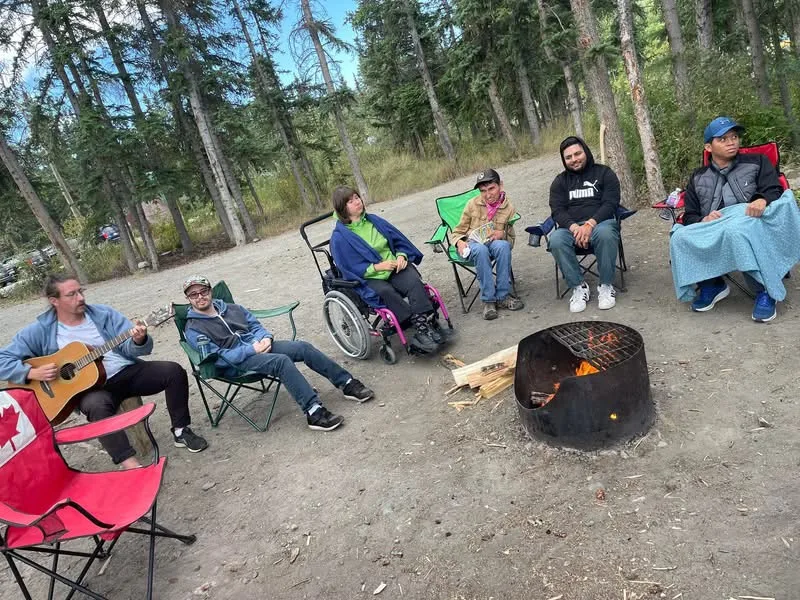
Since 1989, Teegatha’Oh Zheh (TOZ) has supported adults with intellectual and developmental disabilities in Yukon. Founded to support Yukoners returning home after years in large institutions outside the territory, TOZ has been part of the Yukon community for more than 35 years.
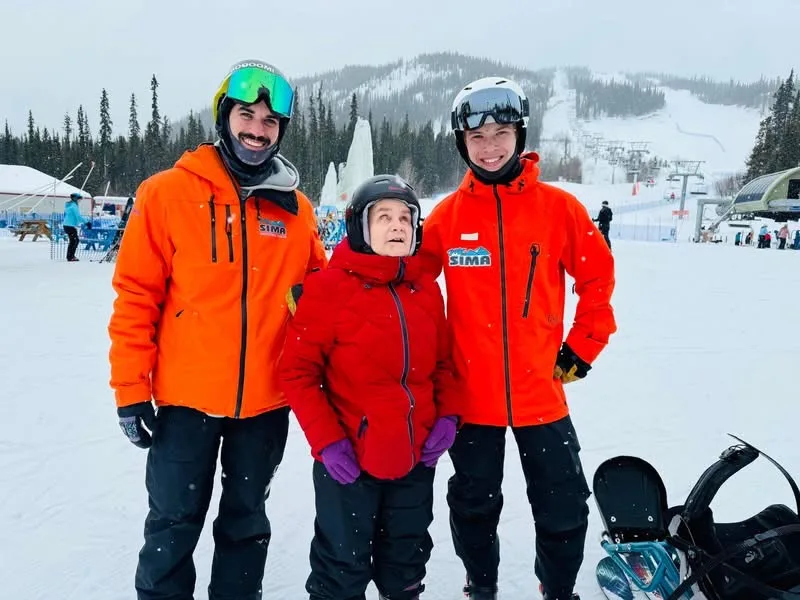
TOZ has since expanded its work to include day programming, employment supports, and community-based services. Today, our work continues to evolve in response to the priorities of people with intellectual and developmental disabilities, their families, and the Yukon community.
TOZ Strategic Plan (2023–2028)
-
Person-Centred Culture
Cultivate Organizational Person-Centered Practices, Competencies, and Culture.
-
Community Engagement
Increase Community Engagement through Collaboration and Supporting Individuals to Have Valued Roles.
-
Reconciliation & Learning
Listen & Learn how TOZ can Support Reconciliation. Build Relationships and Deepen Understanding of Yukon First Nations Traditions, Culture, and Values.
-
Outcomes & Reach
Increase Positive Outcomes and Reach of Supports and Services for Individuals and Families.
-
Organizational Capacity
Build Sustainable Organizational Capacity.
Person-Centred Framework
TOZ is working to build a strong person-centred culture across the organization. Our focus is on individualized supports that strengthen choice and autonomy and support people to have valued roles and make meaningful contributions in their communities.
Being person-centred means listening to what matters to each person and making sure their goals, choices, strengths, and support needs shape the way we work. It also means working collaboratively with families and support networks, while keeping the person at the centre of decisions about their own life.
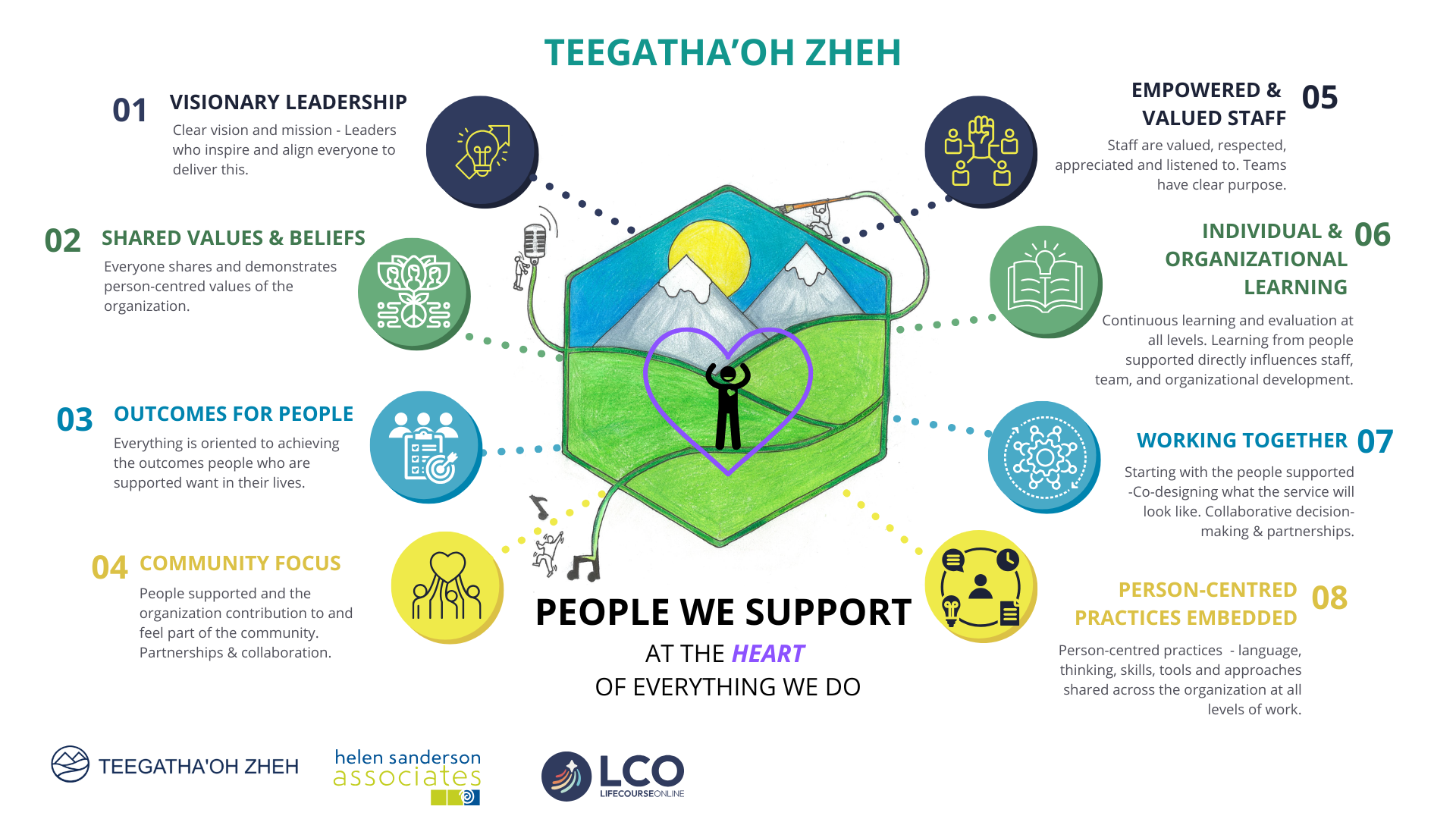
View the full-size framework diagram
Read the framework in text
People we support are at the heart of everything we do. Eight connected areas support this approach:
- Visionary leadership: a clear vision and mission, with leaders who inspire and align everyone to deliver it.
- Shared values and beliefs: everyone demonstrates the organization’s person-centred values.
- Outcomes for people: work is oriented toward the outcomes people want in their lives.
- Community focus: people supported and the organization contribute to and feel part of the community, through partnerships and collaboration.
- Empowered and valued staff: staff are valued, respected, appreciated, and listened to; teams have a clear purpose.
- Individual and organizational learning: continuous learning and evaluation at all levels, with learning from people supported directly influencing development.
- Working together: start with people supported to co-design services, make collaborative decisions, and build partnerships.
- Person-centred practices embedded: share language, thinking, skills, tools, and approaches across all levels of the organization.
Guiding Principles
-
Sustainability
-
Dignity & Full Citizenship
-
Learning for the Uniqueness of the Individual
-
Partnerships
-
Leadership & Excellence
Dignity of Risk
Anyone who leads a life of dignity and meaning takes risks. Each of us, in the pursuit of jobs, our personal and romantic relationships, our leisure activities, and our adventures, have stepped into the unknown and risked failure, rejection, and even physical well-being. Any personal accomplishment has come from some level of risk-taking. The benefits of succeeding in these situations or learning from our mistakes are crucial in our development as independent people.
People who work and live with individuals with disabilities, usually with the best intentions, often try to eliminate all of the risks and prevent any opportunities for failure in these individuals’ lives. Some will even go to great lengths to avoid even minor shortcomings, such as not allowing an individual with a developmental disability to lose at a board game.
What can result is a life where a person has never been tested, has never had the opportunity to grow, has never experienced the satisfaction of achieving something that was not certain to be accomplished from the beginning. People with intellectual and developmental disabilities have faced, and continue to face, systems that limit their choices, autonomy, relationships, and opportunities to take on meaningful roles in their communities.
Taking risks is not equivalent to encouraging recklessness. Allowing risk does not mean disregarding safety or setting people up to fail. People with disabilities have the same right as everyone else to take reasonable risks, make mistakes, and learn from their own experiences. Our role is to support and uphold that right, so that support does not become a barrier to trying new things, testing limits, discovering capabilities, and pursuing goals that enrich their lives.